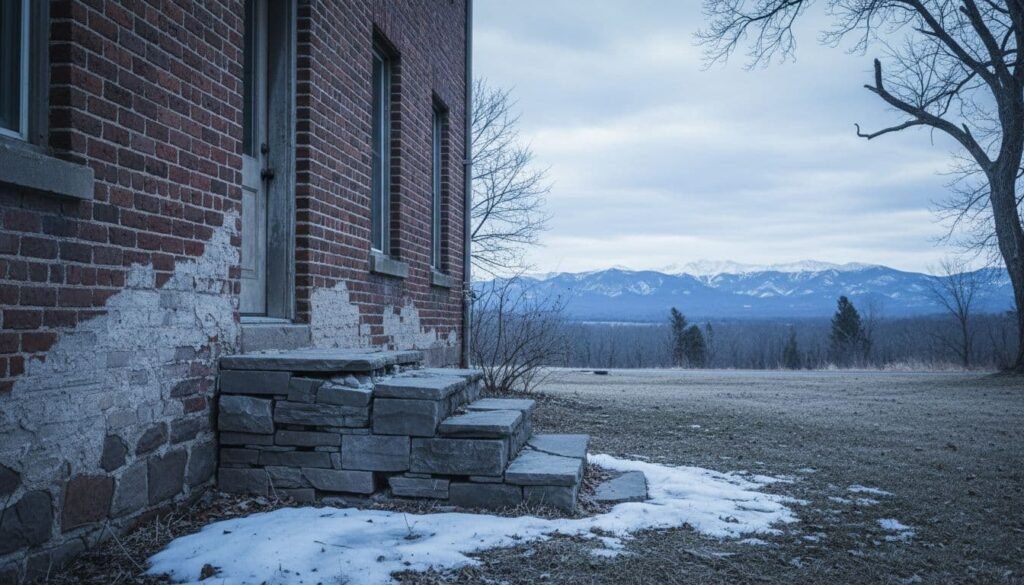
If you live in Montana, you know our weather is rough on houses. One year of snow, ice, hail, and summer sun can do what five years might do in a milder state.
When you compare brick vs stone vs concrete for your home exterior, you are not just choosing a look. You are choosing how your house will handle freeze-thaw cycles, wildfire risk, and decades of wear.
This guide breaks down how each material behaves in Montana conditions, what it really costs over time, and how to talk with a local masonry contractor so you get an exterior that lasts.
What Montana’s Climate Does to Exterior Materials
Montana is tough on masonry. Around Billings, winters swing above and below freezing often. That repeated freeze-thaw cycle pushes water into tiny cracks, then expands, and can pop surface material off brick, stone, or concrete.
A few key factors matter for your exterior:
- Freeze-thaw cycles push weak materials apart and damage poor mortar.
- Snow and ice load adds weight to structure and keeps surfaces wet for long periods.
- Hail hits hard, so brittle finishes can chip or crack.
- High summer sun bakes south and west walls, which can dry out mortar and widen joints.
- Wildfire risk in some rural areas means non-combustible exteriors are a big plus.
- Soil movement around basements and foundations can crack concrete if it is not detailed well.
Any smart choice between brick, stone, and concrete in Montana has to start with these stresses.
Brick Siding and Veneer: Warm Look, Reliable Performance
Brick is a popular choice in Billings neighborhoods because it feels warm, solid, and timeless. Most modern homes use brick veneer, which is a single brick layer tied to a wood or metal frame behind it.
Strengths of brick in Montana:
- Handles hail better than many siding products.
- Good fire resistance, helpful in areas with grass fires.
- Works well with many styles, from ranch homes to two-story builds.
- If you pick a brick rated for exterior use in freeze-thaw conditions, it can last many decades.
The weak points are usually not the brick itself. Problems often come from:
- Poor drainage behind the brick.
- Mortar that is too hard or too soft for the brick type.
- Lack of weep holes at the base of the wall.
When you talk with a contractor, ask what brick type they use and whether it is rated for severe weather. Local crews who focus on Brick masonry services in Billings know how to pick brick and mortar that hold up in our climate.
Brick needs some care over time. Mortar joints may crack or wash out, and the top edge near rooflines is a common spot for water entry. But with proper installation and normal upkeep, brick gives very steady performance here.
Natural Stone: Highest Durability and Mountain Style
Stone fits Montana visually. It feels at home near the rims, in the foothills, and on country lots around Laurel and Lockwood. You can use full bed stone (thicker pieces) or thin stone veneer.
Why many Montana homeowners like stone:
- Very high durability against freeze-thaw and impact.
- Excellent fire resistance around decks and exposed sides.
- Holds color and texture with almost no fading.
- Works great for chimneys, wainscoting (lower wall band), and full facades.
The biggest drawback is cost. Stone is usually more expensive than brick or standard concrete. Labor takes longer because each piece must be shaped and set by hand.
Stone can also be heavy. Full bed stone needs solid foundation support. Thin veneer is lighter, but still needs a solid backing and proper flashing around windows and doors.
In wildfire-prone areas or exposed hillsides, stone is often the best long-term choice. If you want a material that will likely outlast you with minimal maintenance, stone is hard to beat.
Concrete Block and Poured Concrete: Strength First
Concrete shows up in two main ways around Billings homes: poured concrete walls (basements, foundations) and concrete block (CMU) walls that may be finished with stucco, stone, or brick veneer.
Concrete is strong in compression, so it carries vertical loads well. It handles snow load and soil pressure nicely when detailed right.
Advantages of concrete for exteriors and structures:
- Great for basements, retaining walls, and garages.
- Fireproof and pest proof.
- Easy to shape for foundations, steps, and site walls.
- Often the most cost-effective structural material.
Concrete’s weak spots in Montana are surface wear and cracking. Water and de-icing salts can cause scaling or spalling at the surface. Poor control joint layout can lead to random cracks.
For exposed exterior walls, bare concrete is rarely the final look. Most homeowners add stucco, siding, brick, or stone veneer over it. So when you think about concrete in the brick vs stone vs concrete debate, think of it more as the skeleton that other finishes attach to.
If you are building new, it is smart to ask your contractor how the concrete structure will work with your chosen exterior finish. This helps avoid odd step-outs, flashing problems, and future leak points.
Comparing Brick vs Stone vs Concrete for Montana Homes
Here is a quick side-by-side look to help you compare options.
| Factor | Brick Veneer | Natural Stone | Concrete (poured/block) |
|---|---|---|---|
| Upfront cost | Medium | High | Low to medium |
| Durability in freeze-thaw | Good with rated brick | Excellent | Good with proper mix and sealing |
| Hail and impact resistance | Good | Excellent | Good, surface may chip |
| Fire resistance | Very good | Excellent | Excellent |
| Typical maintenance | Repoint mortar as it ages | Very low | Crack repair, sealing where exposed |
| Best uses in Montana | Full facades, chimneys, accents | Full facades, wainscot, chimneys | Basements, foundations, site walls |
| Visual style | Classic, warm, structured | Rustic, mountain, high-end | Plain on its own, needs a finish |
Use the table as a guide, then factor in your budget, house style, and location.
Matching Material to Your Home and Neighborhood
Different parts of the Billings area call for different choices.
- In town, brick or stone veneer on the front with lap siding on the sides is common.
- On rural lots, many owners want full stone on windward sides or around outdoor fireplaces.
- On sloped ground, strong concrete foundations and retaining walls matter more than what you see on the surface.
Think about sightlines from the street, how close your neighbors are, and which walls take the hardest weather. A brick front with stone accents at the entry can give good value. Full stone on key walls can make sense in harsher spots that get strong wind and drifting snow.
If you already have older brick, restoring it instead of replacing it can be a smart move, especially on historic homes.
Questions to Ask Your Masonry Contractor in Montana
A good contractor should welcome clear, direct questions. Here are useful ones to ask before you choose brick, stone, or concrete:
- What material mix do you recommend for our freeze-thaw cycles, and why?
- Is the brick or stone rated for exterior use in a cold climate?
- How will you handle drainage and weep holes behind the veneer?
- What mortar type will you use, and how does it match the material?
- Where will you place control joints in concrete or masonry walls?
- How do you protect the work from winter conditions if we build in cold months?
- What maintenance should I plan for in 10 to 20 years?
For older brick homes, ask how they approach mortar repair. Tuckpointing and repointing services in Billings help extend the life of existing walls by renewing joints before bigger problems show up.
The way a contractor answers these questions will tell you as much as the quote itself.
Balancing Upfront Cost and Long-Term Value
It is easy to focus only on the bid price, but your exterior will be tested every season.
- Brick usually lands in the middle on cost, with solid long-term performance.
- Stone costs more at the start, but often needs the least care over the life of the home.
- Concrete is often the most affordable structure, but may need finishes and sealing to look good and stay tight.
Think about how long you plan to stay in the home. If you expect to be there 20 or 30 years, paying more now for a durable face can save money on repainting, repair, and patching.
Good installation matters more than the label on the product. A well-detailed brick or stone veneer over sound concrete will usually outlast a cheaper job with a premium material installed poorly.
Conclusion: Choose the Exterior That Works Hard in Montana
The right choice in the brick vs stone vs concrete debate depends on your site, budget, and taste, but it also depends on honest answers about weather and wear. Brick offers a classic look with steady performance, stone gives top-end durability and fire resistance, and concrete provides the muscle behind many Montana homes.
Focus on quality installation and materials that are rated for freeze-thaw conditions, not just the pretty samples. If you are unsure which way to go, walk your neighborhood, note which exteriors still look solid after harsh winters, and bring those examples to a trusted local mason. Your home exterior should not only look good today, it should still be standing strong when the next generation is shoveling that same Montana snow.